DNS security refers to the set of protocols, tools, and practices designed to protect the Domain Name System from exploitation, manipulation, and unauthorized access. For IT security professionals, the DNS layer represents both a foundational network service and an increasingly targeted attack surface.
Every device on your network relies on DNS to translate human-readable domain names into IP addresses, which means a compromise at this layer can cascade into data exfiltration, phishing, malware distribution, and complete network disruption. The stakes are not theoretical. In 2023, over 90% of organizations experienced at least one DNS attack.
As threat actors grow more sophisticated, relying on static defenses is no longer viable. AI-powered dns threat detection has emerged as the most effective approach to identifying anomalies in real time, correlating patterns across massive datasets, and automating responses before damage spreads. This article breaks down what DNS security actually means, how it works, why it matters, and where artificial intelligence fits into the picture.
Key Takeaways
- DNS security protects your network's most fundamental name resolution service from targeted attacks.
- AI-powered dns monitoring identifies malicious patterns that rule-based systems routinely miss.
- DNS tunneling and cache poisoning remain the most common and damaging attack vectors today.
- Implementing DNSSEC, encrypted DNS, and behavioral analytics together provides layered defense.
- Continuous domain traffic protection is necessary because DNS attacks happen around the clock.
What Is DNS Security and How Does It Work?
Core Components of DNS Protection
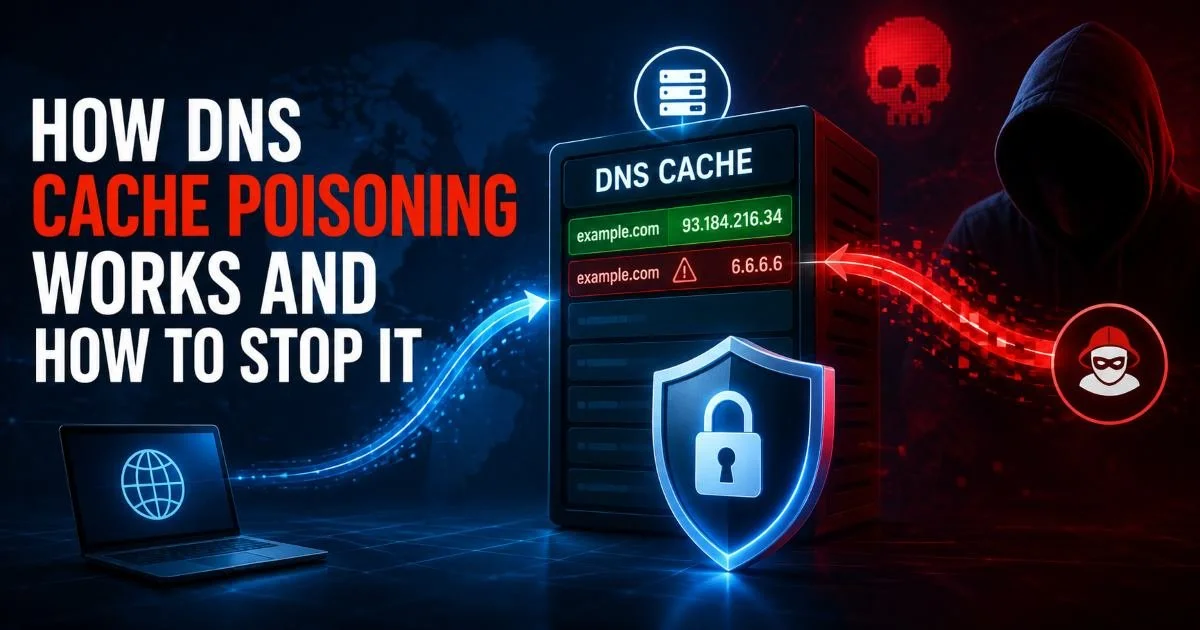
At its core, DNS security works by validating, filtering, and monitoring every DNS query and response that traverses your network. The most widely adopted standard is DNSSEC (Domain Name System Security Extensions), which uses cryptographic signatures to verify that DNS responses have not been tampered with during transit. This prevents attackers from redirecting users to malicious servers through cache poisoning or man-in-the-middle attacks. DNSSEC alone, however, does not encrypt queries or protect against data exfiltration.
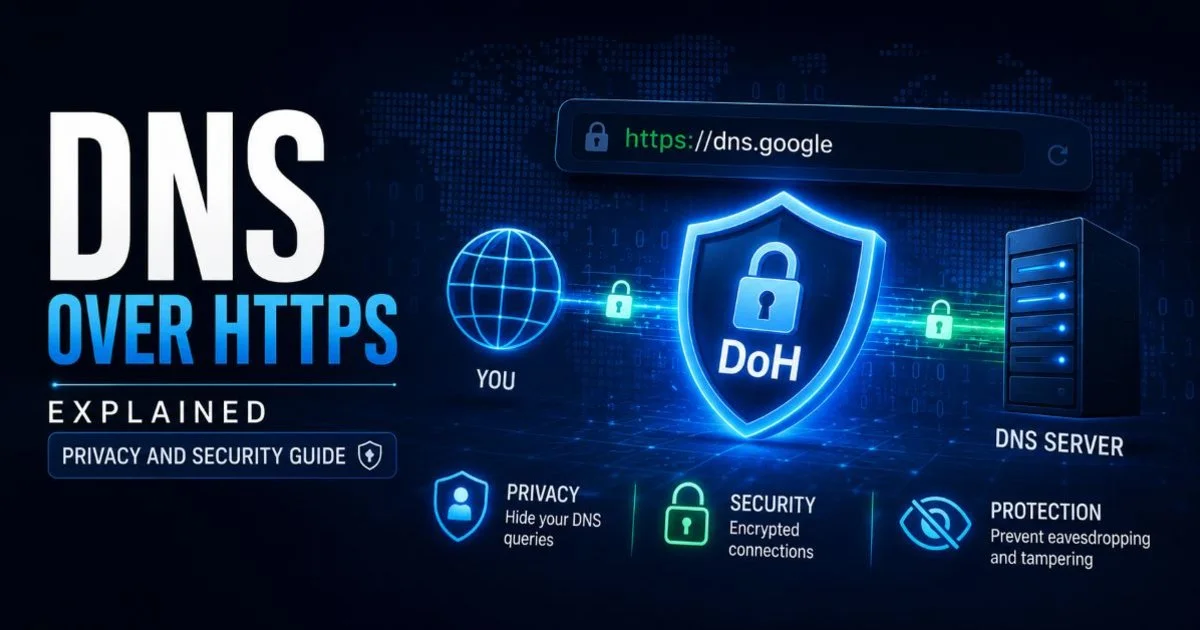
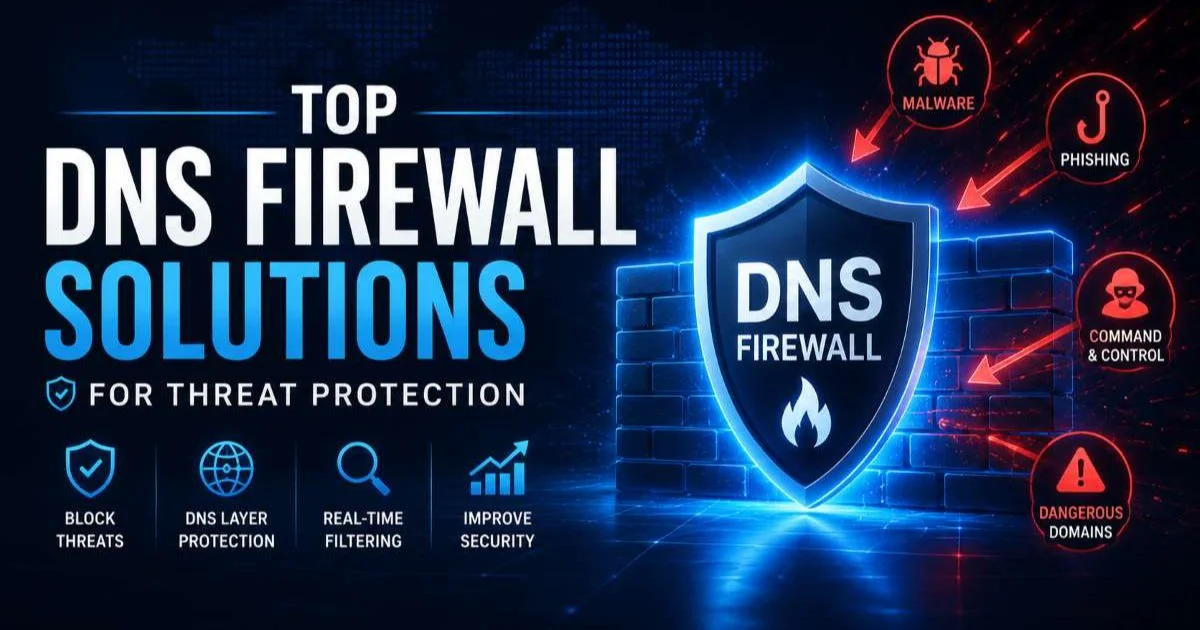
That is where encrypted DNS protocols come in. DNS over HTTPS (DoH) and DNS over TLS (DoT) encrypt the communication channel between the client and the resolver, preventing eavesdropping and manipulation by intermediaries. Organizations also deploy DNS firewalls and response policy zones (RPZs) to block queries to known malicious domains. These firewalls maintain threat intelligence feeds that are updated continuously, rejecting connections to command-and-control servers, phishing sites, and malware distribution networks before any payload reaches an endpoint.
Logging and analytics form the third pillar. Every DNS query generates metadata: the requesting IP, the queried domain, the response code, and the timestamp. Aggregating this data provides deep visibility into network behavior, allowing security teams to spot anomalies like sudden spikes in queries to newly registered domains or unusual TXT record lookups that may indicate tunneling activity. The benefits of DNS protection extend well beyond blocking known threats; they include forensic capabilities and compliance documentation.
Where AI Fits In
Traditional DNS filtering relies on static blocklists and signature matching. AI dns analysis changes the paradigm by applying machine learning models to DNS traffic in real time. These models learn what normal query behavior looks like for a given network and flag deviations, whether that is a ranking domain generation algorithm (DGA) producing randomized hostnames or a low-and-slow exfiltration attempt encoding stolen data into subdomain labels. The result is faster detection, fewer false positives, and the ability to catch zero-day threats that have no known signature yet.
Start with DNS query logging before deploying AI models. You need baseline data to train effective anomaly detection.
Why DNS Security Matters: Use Cases and Real-World Impact
DNS is often called the "phonebook of the internet," but from a security perspective, it is more like an unguarded front door. Because DNS traffic is allowed through nearly every firewall by default on port 53, attackers have long exploited it as a covert communication channel. DNS tunneling, for instance, encodes data within DNS queries and responses, bypassing traditional data loss prevention tools entirely. Without dedicated dns monitoring, these exfiltration attempts can persist for weeks undetected.
The financial impact is significant. According to the IDC Global DNS Threat Report, the average cost of a DNS attack reached $1.1 million in 2023. Beyond direct financial loss, organizations face reputational damage, regulatory penalties, and operational downtime. Healthcare and financial services are particularly vulnerable because DNS attacks can disrupt patient portals, transaction processing, and authentication services that depend on reliable name resolution.
Real Attack Examples
The 2016 Dyn DDoS attack remains one of the most illustrative cases. Attackers used the Mirai botnet to flood Dyn's DNS infrastructure with traffic, taking down major websites including Twitter, Netflix, and Reddit for hours. More recently, the Sea Turtle campaign (2017 to 2019) demonstrated how state-sponsored actors could hijack DNS records to intercept credentials from government agencies and telecom companies across the Middle East and North Africa. These were not theoretical exercises; they caused measurable harm and exposed systemic weaknesses in how organizations manage DNS.
On the enterprise side, DNS tunneling was used in the OilRig APT campaigns targeting organizations in the Middle East. The attackers used custom tools to exfiltrate data through DNS TXT and CNAME records, evading network security controls that only inspected HTTP and SMTP traffic. This case highlighted why domain traffic protection must include DNS-specific inspection, not just perimeter firewalls. Organizations that integrate API-level security with DNS monitoring create a more comprehensive defense posture, and exploring enterprise API security options is a worthwhile complement to DNS-focused strategies.
"DNS is allowed through nearly every firewall by default, making it the perfect covert channel for attackers."
Common Misconceptions About DNS Security
One persistent myth is that DNSSEC alone is sufficient to secure DNS infrastructure. While DNSSEC prevents response forgery, it does nothing to stop DNS tunneling, DDoS attacks against resolvers, or the abuse of legitimate DNS services for malicious purposes. It also does not encrypt queries, meaning an attacker on the same network can still observe which domains a user visits. Treating DNSSEC as a complete solution creates a false sense of security that leaves significant gaps.
Another misconception is that DNS security is only relevant for large enterprises. Small and mid-sized businesses are frequently targeted precisely because attackers assume their defenses are weaker. A compromised DNS resolver at a 200-person company can serve as a pivot point into supply chain attacks affecting much larger partners. The notion that "we are too small to be targeted" has been disproven so many times that it should be retired from every risk assessment conversation permanently.
Some professionals also believe that moving to cloud-hosted DNS resolvers (like Google Public DNS or Cloudflare's 1.1.1.1) eliminates the need for DNS security monitoring. These services offer excellent uptime and some built-in filtering, but they do not provide visibility into your internal DNS traffic or the ability to enforce custom policies based on your organization's threat model. You still need internal dns threat detection tools that can correlate DNS activity with endpoint data, authentication logs, and network flow records.
Do not assume cloud DNS providers handle all security for you. Internal visibility and custom policies remain your responsibility.
DNSSEC adoption remains below 50% globally despite being available for over a decade. Deployment barriers include complexity and lack of registrar support.
DNS Security vs. Related Network Security Concepts
DNS security is sometimes confused with broader network security categories, but it occupies a distinct and specialized role. Network firewalls inspect traffic at the packet level and enforce access control lists, but they rarely parse DNS payloads for anomalous content. Intrusion detection systems (IDS) may flag known DNS attack signatures, yet they lack the behavioral modeling that dedicated ai dns analysis platforms provide. Understanding these distinctions helps security teams allocate budget and tooling more effectively.
Web application firewalls (WAFs) protect HTTP endpoints from injection attacks and bot traffic, but they operate at a different layer entirely. A WAF will not detect a DNS rebinding attack or flag suspicious CNAME chains. Similarly, endpoint detection and response (EDR) tools monitor process behavior on individual machines but often treat DNS as a black box, forwarding queries to whatever resolver is configured without inspecting the content. DNS security fills the gap between these tools by providing protocol-specific visibility.
The relationship between these tools should be complementary, not competitive. A mature security architecture layers DNS security on top of firewalls, EDR, and SIEM platforms, feeding DNS telemetry into centralized analytics. When a SIEM correlates a suspicious DNS query with an anomalous login event and an endpoint alert, the combined signal is far stronger than any single data source. This integrated approach transforms DNS from a blind spot into one of the most valuable sources of threat intelligence in your environment.
Zero trust architectures also benefit directly from DNS security integration. By validating DNS queries against policy before any connection is established, organizations can enforce access controls at the earliest possible stage. If a compromised device attempts to resolve a command-and-control domain, DNS-layer enforcement blocks the connection before the TCP handshake even begins. This is fundamentally faster and more resource-efficient than inspecting the resulting traffic after a connection is established.
Feed DNS logs into your SIEM and create correlation rules that match DNS anomalies with authentication and endpoint events.

Final Thoughts
DNS security is not a niche specialty; it is a foundational layer that every IT security professional must actively manage. The attack surface is broad, the techniques are evolving, and the consequences of neglect are measured in millions of dollars and months of recovery time. AI-powered analysis has made it possible to detect threats that were invisible just a few years ago, turning DNS logs from a compliance checkbox into a proactive defense tool.
Start with visibility, layer in DNSSEC and encrypted protocols, deploy behavioral analytics, and integrate everything into your broader security operations. The organizations that treat DNS as a first-class security domain will be the ones best positioned to withstand what comes next.
Disclaimer: Portions of this content may have been generated using AI tools to enhance clarity and brevity. While reviewed by a human, independent verification is encouraged.